

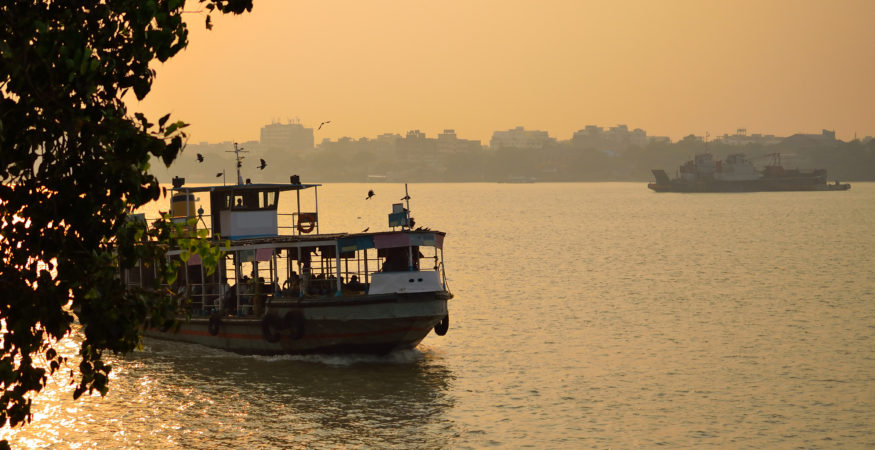
The Ganges, often called the Ganga, is not just a river; it is one of India’s most culturally significant and spiritually endowed waterways. For centuries, it has shaped history, religion, and the daily lives of the millions who live near its banks. As someone who helps tailor these unique journeys and who has taken a Ganges cruise, I can tell you that a luxury river cruise on the Ganges offers a slower, more comfortable, and deeply immersive way to experience this incredible country.
You will sail past ancient temples, magnificent palaces, historic colonial towns, artisan villages, whilst witnessing the rhythms of everyday river life. These are the truly unforgettable Ganges River sights that define this unique travel and cultural experience.
I think it’s important to say that itineraries do vary. Most cruises focus on the Lower Ganges (also known as the Hooghly River), which flows through West Bengal, while some longer cruise-and-tour holidays include the sacred cities of Varanasi and Sarnath. It is unlikely that you would only do the Ganges river cruise, but instead use it as the heart of a much wider Indian experience – that would definitely be our recommendation. Ready to discover the 10 highlights that await you?
Not sure which itinerary includes the sights you most want to see? Speak to our river cruise specialists for tailored advice.
What Makes the Ganges Such a Memorable River Cruise Destination?
As travel experts, we often speak to clients who are curious about India but are looking for a comfortable and structured way to explore its cultural richness. The Ganges river cruise perfectly matches this desire, offering an incredible combination of cultural depth and scenic value.
What truly sets this destination apart is the sheer depth of history you encounter. You are stepping into a world defined by ancient temples, crucial pilgrimage cities, significant colonial history, and vibrant, enduring riverside communities. Cruising here is about slow travel—it’s the gentle pace of village life, the opportunity to spot birdlife, and the breathtaking views of sunrise and sunset over the water that make every day special.
You are immersed in the environment, but with the added comfort factor of exploring India while returning to the same luxury river ship each evening. If you are culturally curious but appreciate some comfort, as well as looking for expert-led excursions focused on history and heritage, then the Ganges is the right choice for you.
1. Kolkata: The Cultural Gateway to the Ganges
For many of the best river cruise itineraries, Kolkata serves as the vibrant and atmospheric start or end point. This is a city of magnificent contrasts, causing it to be a colourful, busy, and often overwhelming introduction to India. You’ll see grand imperial architecture from the city’s colonial past, like the iconic Victoria Memorial, and the real magic lies in the vibrant daily life unfolding around it.
For Kolkata, our must-see list of key sights also includes the impressive Howrah Bridge and the incredibly photogenic Mullik Ghat Flower Market. We always recommend a pre- or post-cruise stay here in one of the city’s luxury hotels to truly soak in the energy and see how the grandeur of the past collides with the hustle of the present.
2. The Ghats: Daily Life on the Riverbank
The ghats are perhaps the most distinctive and culturally significant sights you’ll encounter along the river. Spiritually, they are the “soul” of the river. Simply put, these are sets of steps leading down to the river, but their purpose is profound: they are the focal points for bathing, prayer, ceremonies (including cremation), and essential daily routines.
From the deck of your ship, or during your morning excursions, you will see the ancient rituals of morning prayer, people washing clothes, making offerings, or simply enjoying the peaceful company of small boats gliding by. When observing this local life, it is crucial to adopt a respectful, observational, and culturally sensitive tone. These are not staged events; they are sacred, everyday practices, and a privilege to witness.
The most spectacular time to visit the ghats is at sunrise or sunset. The Ganga Aarti ( a fire ritual) held at the Dashashwamedh Ghat every evening is a must-see.
3. Kalna’s 108 Shiva Temples
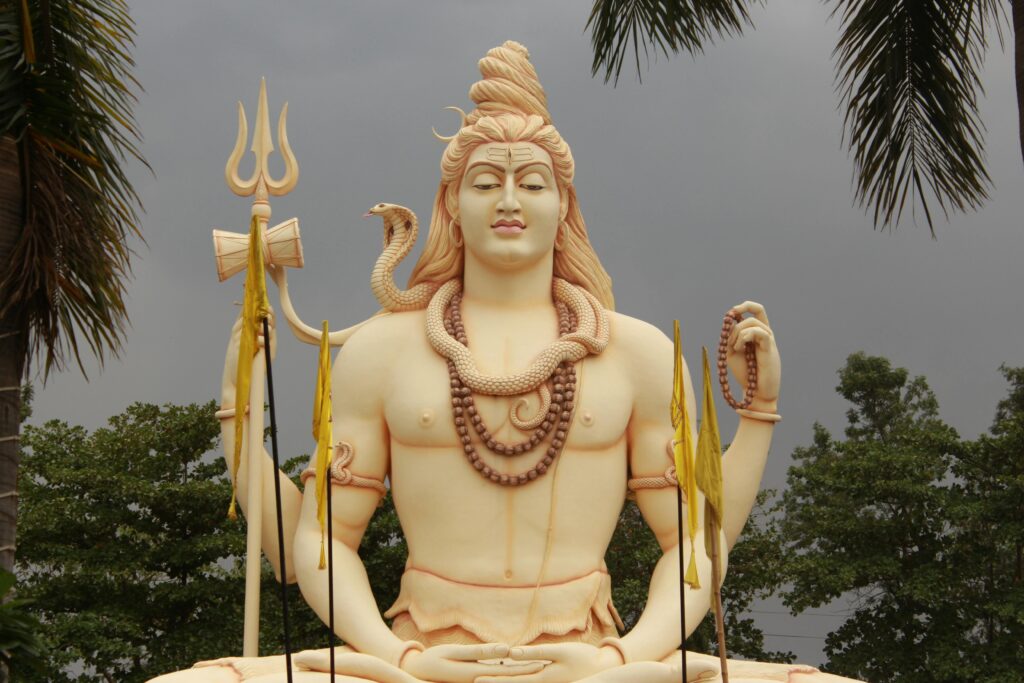
A popular stop on the Lower Ganges route is Kalna, which offers a truly remarkable architectural and spiritual sight. Built in 1809 by the Maharaja of Bardhaman, these temples are a masterpiece of terracotta art and spiritual design. The highlight here is the complex of 108 Shiva temples (often referred to as the Nava Kailash temples), distinctively arranged in two perfect, concentric circles – the inner circle has 34 and the outer 74. This level of symmetry and repetition makes the complex stand out immediately, due also to its alternating white and black marble shivalingas (representations of Shiva), creating a peaceful and uniquely beautiful atmosphere.
For architecture lovers, culture-focused travellers, and anyone interested in Hindu heritage, the temples are a must-see. They also offer an incredible photography appeal, with the repeated, conical temple roofs creating a memorable visual pattern. The quiet here is in major contrast to other, more crowded Indian tourist destinations.
4. Murshidabad and Hazarduari Palace
Murshidabad is an important historic centre in Bengal, and a stop here provides fascinating historical depth. It is essentially an open-air museum, and the Hazarduari Palace is its highlight. The Hazarduari Palace name literally translates to ‘A Palace with a Thousand Doors’. While not all are real, this feature alone makes the architecture fascinating.
The area is steeped in Nawabi history, and the palace itself often houses relevant museum collections that tell the story of the region’s powerful past and its complicated transition to colonial rule. For those who love history and specifically seek palace architecture and stories of Indian royalty, Murshidabad stands out as one of the best Ganges River sights. Situated right on the riverbank, the grounds are extensive, so a very easily accessible and walkable site.
5. Chandernagore: French Colonial Heritage on the Hooghly
Cruising the Hooghly River constantly surprises you with its variety. Just when you might expect another temple or palace, you arrive at Chandernagore (or Chandannagar). A former French colonial settlement from 1673 to 1950, this stop is memorable because of its unexpected European influence, a unique counterpoint to the British influence found in Kolkata, and the slower, atmospheric riverside setting.
Here, you can wander along the charming riverside promenade and view French-influenced architecture, including churches and other heritage buildings. The town is best seen from a relaxed walking tour to really take in the striking blend of European classicism and local Bengali influences.
6. Matiari: Traditional Brass-Working Villages
A Ganges river cruise is not just about historic monuments; it is also about connecting with India’s living heritage. This is why the stop at Matiari, which is basically a traditional brass-working village, is one of my personal highlights. IT’s one of the best places in India to see traditional brass and copper smithing in action today. Here, you get an extremely welcoming, immersive, human-led cultural experience.
You can explore the artisan workshops, witnessing makers at work as they use traditional methods to hand-beat beautiful brass items. This authentic connection shows that local craft traditions are still thriving. It’s a prime example of how smaller river ships allow access to communities that are often missed on wider India tours, giving you a personal insight into the heart of the region.
It’s loud, it’s dusty, busy and authentic, with no polish for the tourists. You can buy the brassware straight from the artisan who made it. It’s a highlight for those looking for human stories over architecture.
7. Mayapur and Sacred Riverside Temples
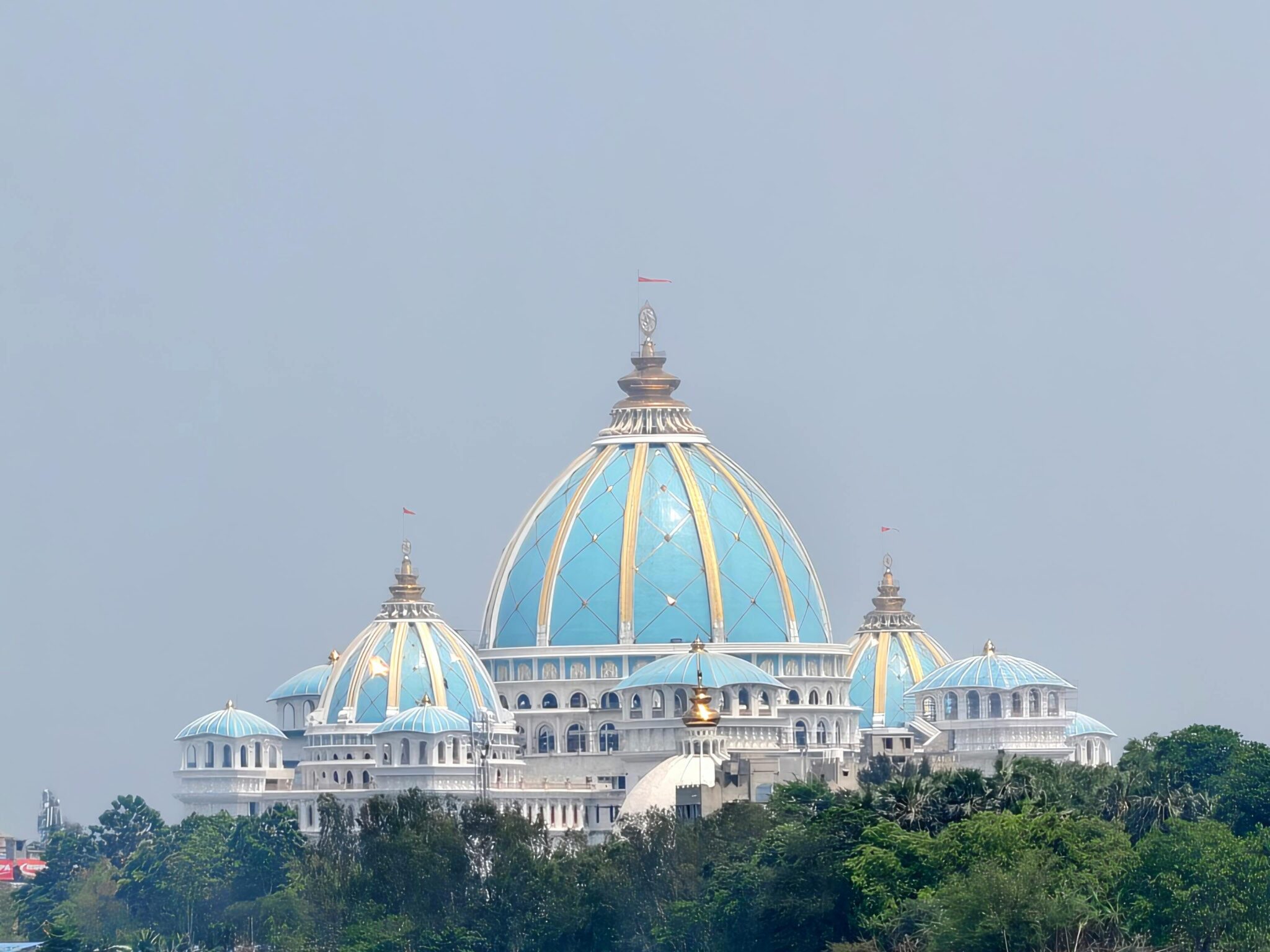
Mayapur is a deeply sacred riverside destination that appeals strongly to travellers interested in spiritual heritage and architecture. Mayapur is essentially a “spiritual city” that has grown around the birthplace of Chaitanya Mahaprabhu, a 15th-century Vaishnava saint. It is primarily associated with the Hare Krishna movement and is home to impressive temple complexes.
The Temple of the Vedic Planetarium is the centrepiece of Mayapur and one of the largest religious buildings in the world. Its sheer scale is staggering; the dome is massive, and the interior is intricately decorated with marble and gold. Unlike the ancient, weathered ghats of Varanasi, Mayapur is vibrant, polished, and meticulously maintained.
It’s a bustling community of devotees from all over the world, creating a unique, multicultural spiritual environment that is quite different from other riverside stops. When you visit, you will immediately feel the powerful pilgrimage atmosphere. The sheer scale of the temple structures, combined with their peaceful riverside setting, offers immense cultural insight and is an important sight for anyone exploring India’s diverse religious landscape.
We ensure our excursions and information are always respectful and informative regarding these sites of faith.
8. Varanasi: India’s Most Famous Sacred River City
Varanasi is, without a doubt, one of India’s oldest, most sacred, and most searched-for destinations. If you are seeking the ultimate, profound experience on the Ganges, this is it. The key experiences here are truly transformative: taking a sunrise boat ride, walking among the thousands gathered at Dashashwamedh Ghat and Assi Ghat, and witnessing the mesmerising evening aarti (fire ritual). The narrow lanes leading to the river are filled with an atmosphere unlike anywhere else. For Hindus, the Ganges in Varanasi is the gateway to moksha (liberation from the cycle of rebirth). This makes the river here a living entity, not just a waterway.
Important route clarification: It is vital to know that not every Ganges cruise includes Varanasi. Given its location further upstream, some itineraries include it as part of a cruise-and-land tour or extension. If Varanasi is high on your wish list, my advisory angle is clear: you must check the itinerary carefully before booking.
If Varanasi is high on your wish list, our specialists can help identify itineraries that include it in the right way.
9. Sarnath and Buddhist Heritage
For travellers whose itineraries include Varanasi, Sarnath, one of the four most sacred sites in Buddhism, is located close by. This is a destination for those interested in religious history and ancient India. The site at Sarnath is historically significant as the place where Buddha is traditionally said to have given his first sermon, and dates back over 2,500 years.
Sarnath is quiet, green and spacious. You can explore the serene Deer Park, ancient stupas, and monastic ruins. It offers a peaceful contrast to the intense spiritual energy of Varanasi, providing a calm space for reflection on the roots of one of the world’s great religions.
10. Wildlife and River Life Along the Ganges
While the magnificent temples and cities are the main draw, the quieter moments of the cruise, the time spent simply observing the river, are often part of the greatest appeal. We must remember that the Ganges is a living ecosystem. Your cruise experience includes opportunities to spot wildlife and observe everyday river scenes. Possible sightings, though they vary by season and route, include rare Ganges river dolphins, a wide array of birdlife, and the constant presence of fishing boats.
As you move past rural villages, fields, and quiet riverbanks, you will get a unique perspective on India. This slow travel and scenic observation is really the perfect way to cap off such a journey.
Which Ganges River Sights Are Included on Most Cruises?
This is the most practical question asked by our clients, and the key is understanding the route. Ganges river cruise itineraries vary significantly by operator, water levels, season, and route.
The majority of dedicated river cruises focus on the Lower Ganges, or Hooghly River. These cruises commonly focus on the following core sights:
- Kolkata
- Chandernagore
- Kalna
- Matiari
- Murshidabad
- Mayapur
However, longer cruise-and-tour itineraries often combine the river cruise with land travel, which may add destinations such as Varanasi, Sarnath, Patna, and other upstream destinations.
But be very careful! Do not assume all 10 sights are included on every itinerary. To ensure you see your priority destinations, you need to choose your cruise based on your must-see places, preferred travel dates, and the sort of pace you desire.
How to Choose the Right Ganges River Cruise
Selecting the perfect Ganges itinerary means answering a few key decision questions:
- Do you primarily want to focus on the Lower Ganges, or is Varanasi essential to your trip?
- Do you prefer a cruise-only experience, or are you open to a cruise-and-land tour combination?
- How much cultural touring do you want versus time spent relaxing on the ship?
- What comfort level and specific operator style suit you best?
- What time of year are you planning on travelling?
- Are you combining India with another international destination?
Here at Global River Cruising, tell us which Ganges river sights matter most to you, and we’ll help you compare the itineraries that include them.
FAQs About Ganges River Sights
Discover some of the most commonly asked questions around sightseeing on the Ganges.
What are the best sights on a Ganges river cruise?
The most memorable sights include the vibrant city of Kolkata, the geometrically perfect 108 Shiva Temples at Kalna, the historic Hazarduari Palace in Murshidabad, the French architecture of Chandernagore, the artisan village of Matiari, the sacred temples of Mayapur, and, if included, the spiritual city of Varanasi and Buddhist heritage at Sarnath. The river ghats and surrounding wildlife complete the list.
Do Ganges river cruises visit Varanasi?
Some itineraries do visit Varanasi, but many cruises that focus solely on the Lower Ganges/Hooghly River do not. Varanasi typically appears as part of longer itineraries, dedicated extensions, or cruise-and-tour holidays that involve land travel.
What is the best time to cruise the Ganges?
Generally, the cooler and drier months are preferred for cruising the Ganges. However, the exact timing that works best for your trip depends on the specific route, seasonal water levels, and the schedules of the various river cruise operators.
Are Ganges river cruises suitable for first-time visitors to India?
Yes, absolutely. They are particularly well-suited for travellers who value comfort and want a base that they return to each night, while still exploring culturally rich destinations through expert-guided excursions.
Is a Ganges river cruise more cultural or scenic?
It is genuinely both, but the main appeal is overwhelmingly cultural. The primary focus is on visiting temples, palaces, ghats, artisan villages, colonial towns, and experiencing spiritual heritage. This is all beautifully supported by the scenic river landscapes and daily life along the banks.

Share:
About Adam Budd
View all posts by Adam Budd